

Non-Surgical Hair Replacement Solutions
Not every patient experiencing hair loss is ready for surgery — and not every patient needs it.

- Home
- Hair Loss Solutions
- Non- Surgical Hair Loss Solutions
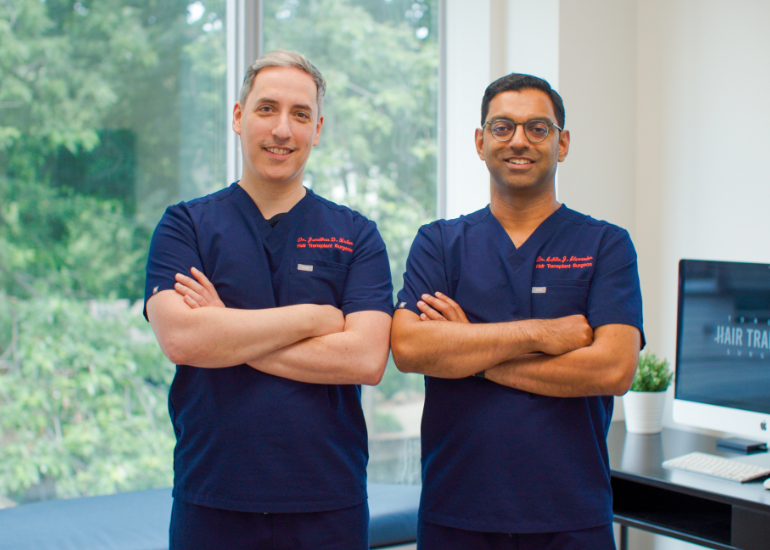
Toronto Hair Transplant Surgeons are internationally known for our pioneering work in hair transplantation.
About Non Surgical Hair Replacement:
For many men and women, the best first step is a non-surgical approach that slows progression, improves density, and preserves existing hair.
At Toronto Hair Transplant Surgeons, our approach to non-surgical hair restoration is guided by the same principles that define our surgical work: honesty, precision, and long-term planning.
We do not believe in one-size-fits-all solutions or temporary fixes disguised as permanent answers. Instead, we help you understand what is causing your hair loss, which options are most likely to help, and when it may be appropriate to consider the next step.
Whether you are in the early stages of thinning, want to maintain the results of a previous transplant, or are simply not ready for surgery, there are effective non-surgical options available.
Understanding Non-Surgical Hair Loss Treatment in Toronto
Non-surgical hair restoration refers to treatments that help preserve, strengthen, and improve existing hair without surgery.
These treatments are most effective when hair follicles are still present but becoming weaker or thinner. In other words, they work best before hair loss becomes advanced.
Common non-surgical hair replacement options include:
- PRP (Platelet-Rich Plasma) therapy
- Prescription medications such as finasteride and minoxidil
- Low-level laser therapy
- Hair care and scalp health programs
Unlike a hair transplant, these treatments do not create new follicles where hair is completely absent. Instead, they focus on:
- Slowing progression
- Strengthening existing hair
- Improving overall density and quality
Many patients searching for “non surgery hair replacement” or “non surgical hair replacement” are looking for a way to avoid surgery entirely. In some cases, this is possible. In others, non-surgical treatment is most effective as part of a larger, long-term plan.
The key is understanding what stage of hair loss you are in — and what is realistically possible
Types of Non-Surgical Hair Restoration
There is no single best non-surgical hair restoration treatment. The right approach depends on your pattern of hair loss, your goals, and how much existing hair can still be preserved.
PRP Therapy
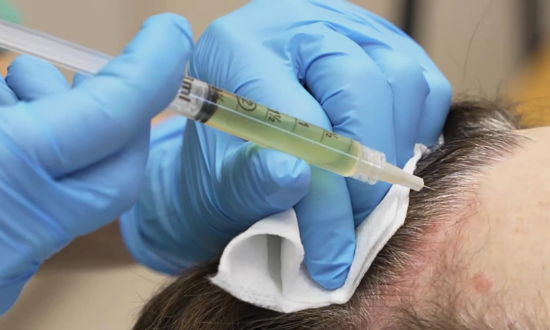
PRP uses growth factors from your own blood to stimulate weakened follicles.
The process involves drawing a small amount of blood, separating the platelet-rich plasma, and carefully injecting it into areas of thinning.
PRP is often recommended for:
- Early thinning
- Hair that has become finer or weaker
- Patients who want to support existing growth
- Maintaining density after a transplant
PRP is particularly valuable because it uses your body’s own healing response to support the scalp and follicles.
Most patients require:
- A series of 3–4 initial treatments
- Maintenance treatments every 6–12 months
PRP can improve hair quality, slow progression, and increase the appearance of density. However, it is important to understand that it works best when follicles are still alive.
Medical Therapy
Prescription medications remain one of the most effective forms of non-surgical hair restoration.
These may include:
- Finasteride to reduce DHT-related hair loss
- Minoxidil to stimulate growth cycles
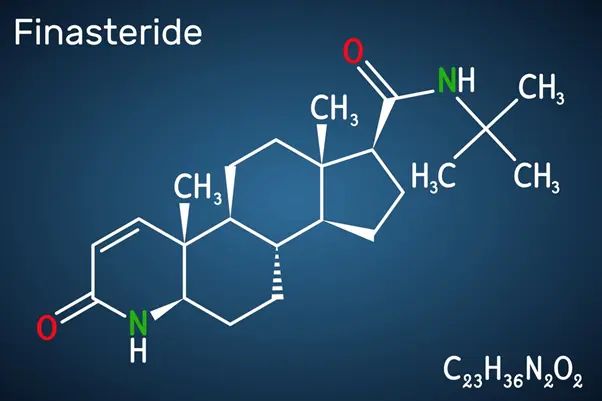
Finasteride works by lowering the hormone DHT, which is responsible for male pattern baldness. Minoxidil helps prolong the growth phase of hair and improve blood flow to the follicles.
These treatments are especially effective for:
- Male pattern baldness
- Early to moderate thinning
- Patients hoping to delay surgery
Medication is often one of the most important parts of a long-term plan because it can help stabilize hair loss before it progresses further.

Finasteride
Finasteride is the only Health Canada and FDA-approved oral (taken by mouth) medication for genetic hair loss (androgenetic alopecia, also known as male pattern hair loss) in men. Research has shown that Finasteride is effective for many patients with male pattern hair loss.
We will take you through all the most common questions about finasteride, including if it is safe for women below. This information is intended to help patients make informed decisions about their treatment options.
Minoxidil
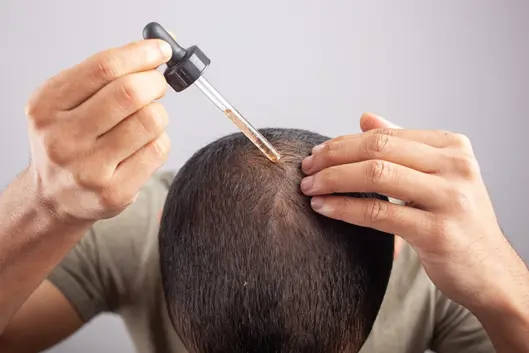
Minoxidil is the generic name for Rogaine, a topical solution used to prevent hair loss and to help regrow hair, especially for those experiencing hair thinning, in people with genetic hair loss or androgenetic alopecia.
Minoxidil works by improving blood flow through the blood vessels in the scalp, delivering oxygen and nutrients to hair follicles. This increased blood flow nourishes the hair follicles and can help promote the growth of thicker hair.
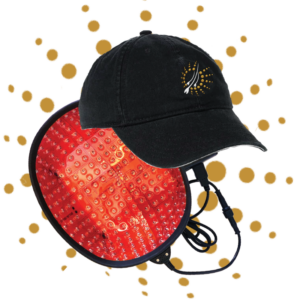
Low-Level Laser Therapy
Low-level laser therapy uses light energy to stimulate circulation and follicle activity.
This type of treatment is painless and non-invasive. It is commonly used:
- Alongside PRP or medication
- To support existing hair growth
- As part of a long-term maintenance plan
Laser therapy is not intended to replace other treatments. Instead, it often works best as part of a broader approach.
For many patients, the strongest results come from combining treatments rather than relying on a single option.
Our Results
Toronto Hair Transplant Surgeons are internationally known for our pioneering hair transplantation work.
Our huge archive is here to help you see what we can do for you. Use the link below to view some sample cases.
How Long Does It Take to See Results?
One of the most important things to understand about non-surgical hair restoration is that results take time.
Hair grows slowly, and any treatment designed to improve hair quality or density works gradually.
Most patients can expect:
- Little visible change during the first month
- Early signs of reduced shedding after 2–3 months
- Improved density and thickness around 4–6 months
- Continued improvement over 6–12 months
This timeline varies depending on:
- The type of treatment used
- How advanced the hair loss is
- How consistently the treatment is followed
Patients often become discouraged too early because they expect immediate improvement. In reality, the best results come from staying consistent and giving the follicles time to respond.
The goal of non-surgical treatment is not dramatic overnight change. It is gradual, natural improvement that continues over time.
Before and After Non-Surgical Hair Restoration
The best way to understand what non-surgical treatment can achieve is to look at before and after results.
Patients who respond well to non-surgical treatment often notice:
- Less visible scalp show-through
- Improved thickness and density
- Stronger, healthier-looking hair
- Slower progression of hair loss
The results are usually more subtle than a hair transplant — but for the right patient, they can still be significant.
A successful non-surgical result should not make it look like you have “done something.” Instead, it should make your hair look fuller, healthier, and more like it once did.
The strongest results are often seen in patients who:
- Begin treatment early
- Remain consistent
- Follow a customized plan
This is why early intervention is so important. The more hair that can be preserved, the more effective non-surgical treatment becomes.
How to Choose the Best Non-Surgical Hair Restoration Treatment for You
The best treatment is the one that matches both your stage of hair loss and your long-term goals.
For example:
- If you are in the early stages of thinning, medication or PRP may be enough to slow progression
- If you have moderate thinning, a combination approach may provide better results
- If hair has been absent for years, a hair transplant may ultimately be more effective
This is where many patients become frustrated. They try treatments one at a time, often without knowing whether they are appropriate for their specific pattern of hair loss.
At Toronto Hair Transplant Surgeons, we begin by identifying:
- What type of hair loss you have
- How advanced it is
- Whether the follicles are still active
- Which treatments are most likely to produce a worthwhile result
Our role is not to recommend the most aggressive treatment. It is to help you choose the right treatment.
THTS Gallery

Familiarize yourself with our layout before you come in.
Visit the gallery to take a peek at our Oakville based clinic layout and surgical rooms.
Cost of Non-Surgical Hair Restoration
The cost of non-surgical hair restoration depends on the treatment being used and how long it is continued.
Approximate costs may include:
- PRP therapy: approximately $500–$1,200 per session
- Prescription medications: typically $30–$150 per month
- Low-level laser therapy: several hundred to several thousand dollars depending on the device or program
Because most patients require ongoing treatment, the total cost should be viewed over time rather than as a one-time expense.
For example:
- PRP may involve several sessions initially, followed by maintenance
- Medications may need to be continued indefinitely
- Laser therapy often requires long-term use
Unlike a hair transplant, which is permanent, non-surgical hair restoration usually requires continued maintenance.
For some patients, this is still the right choice. Particularly in the early stages of hair loss, non-surgical treatment can delay or reduce the need for surgery.
The most cost-effective approach is not necessarily the cheapest one today. It is the one that provides the greatest long-term value.
Maintaining Results from Non-Surgical Hair Restoration
Non-surgical treatments work best when they are used consistently.
One of the most common reasons patients become disappointed is because they stop treatment too early or expect immediate results.
Hair grows slowly. Most non-surgical treatments require:
- Several months before noticeable improvement
- Continued use to maintain gains
- Periodic reassessment and adjustment
For example:
- PRP is often performed as a series, followed by maintenance treatments
- Medications such as finasteride and minoxidil need to be continued to preserve results
- Laser therapy works best with regular, long-term use
Maintaining results is not complicated, but it does require commitment.
At Toronto Hair Transplant Surgeons, we help patients create a plan that is realistic, sustainable, and designed to evolve over time.
Considering Hair Transplants: When Should You Take the Next Step?
There may come a point when non-surgical treatment alone is no longer enough.
If hair follicles have stopped producing hair entirely, no non-surgical treatment can bring them back. This is when a hair transplant may become the more effective option.
You may want to consider the next step if:
- Hair loss continues despite treatment
- You have areas of complete thinning or baldness
- You want a more permanent solution
- You are no longer satisfied with the level of improvement from non-surgical treatment
Some patients refer to this as a “non invasive hair transplant,” but it is important to understand that there is no truly non-invasive hair transplant. A hair transplant is still a surgical procedure.
However, modern FUE techniques are far less invasive than older methods and can often provide a natural, long-term solution when non-surgical options are no longer sufficient.
The best time to consider surgery is before hair loss becomes so advanced that options become limited.
Non-Surgical Hair Restoration vs Hair Transplant
Patients often wonder whether they should continue with non-surgical treatment or move toward surgery.
The difference is simple:
- Non-surgical hair restoration helps preserve and improve hair that still exists
- A hair transplant restores hair to areas where follicles are gone completely
You may be better suited to non-surgical treatment if:
- You still have active follicles
- Hair loss is mild to moderate
- You want to delay surgery
You may be better suited to surgery if:
- You have significant thinning or baldness
- Hair has been absent for years
- You want the most permanent result possible
In many cases, the best approach combines both.
For example, a patient may undergo a transplant to restore the hairline, while using PRP or medication to maintain surrounding hair.
This combined approach often provides the most natural and lasting result.
Is Non-Surgical Hair Replacement Right for You?
You may be a good candidate for non-surgical hair restoration if you:
- Are in the early stages of thinning
- Still have active hair follicles
- Want to delay or avoid surgery
- Want to maintain results after a transplant
You may not be an ideal candidate if:
- You have extensive baldness
- Hair has been absent for many years
- You are looking for an immediate, permanent solution
The most important step is understanding what is realistic.
At Toronto Hair Transplant Surgeons, we believe in telling patients the truth — even if that means advising against a treatment.
Sometimes the right answer is non-surgical hair restoration. Sometimes it is surgery. Often, it is a thoughtful combination of both.
FAQs on Non-Surgical Hair Replacement
What Is a Non-Surgical Hair Replacement System?
A non-surgical hair replacement system refers to treatments designed to improve or preserve existing hair without surgery.
Summary: These treatments support hair that is still present but thinning.
Why Choose a Non-Surgical Hair Replacement System?
Non-surgical treatment may be appropriate if you want to avoid surgery, maintain existing hair, or slow progression.
Summary: It can be an effective first step for many patients.
Why Do You Need a Non-Surgical Hair Replacement Consultation?
A consultation helps determine whether your follicles are still active and which treatment is most appropriate.
Summary: The right treatment depends on the type and stage of hair loss.
Is Customization Possible in Non-Surgical Hair Replacement?
Yes. The best results come from combining treatments based on your individual hair loss pattern.
Summary: Non-surgical hair restoration should always be personalized.
Will My Own Hair Follicles Be Damaged After Non-Surgical Hair Replacement?
No. Non-surgical treatments are designed to support and strengthen existing follicles, not damage them.
Summary: These treatments are intended to improve hair health.
Who Is the Right Candidate for Non-Surgical Hair Replacement?
The ideal candidate still has active hair follicles and is experiencing early to moderate thinning.
Summary: Non-surgical treatment works best before hair loss becomes advanced.
Is It Possible to Restore Lost Hair Non-Surgically?
If follicles are still alive, non-surgical treatments may improve density and growth. If follicles are gone completely, surgery is usually required.
Summary: Non-surgical treatment can restore thinning hair, but not completely absent hair.
Your Next Step
If you are considering non-surgical hair restoration, the most important question is not which treatment is “best.”
It is which treatment is best for you.
- Learn more about PRP and medication options
- Explore whether you may be a candidate for surgery in the future
- Or book a consultation for a personalized assessment
We are here to guide you — with clarity, honesty, and a long-term plan built around your goals.