

Hair Loss Treatments For Men
Understanding the cause is the first step. Restoring it properly is the next.
At Toronto Hair Transplant Surgeons, we take a surgeon-led approach to diagnosing and treating male hair loss — combining medical insight with long-term restoration strategies designed for natural, lasting results.
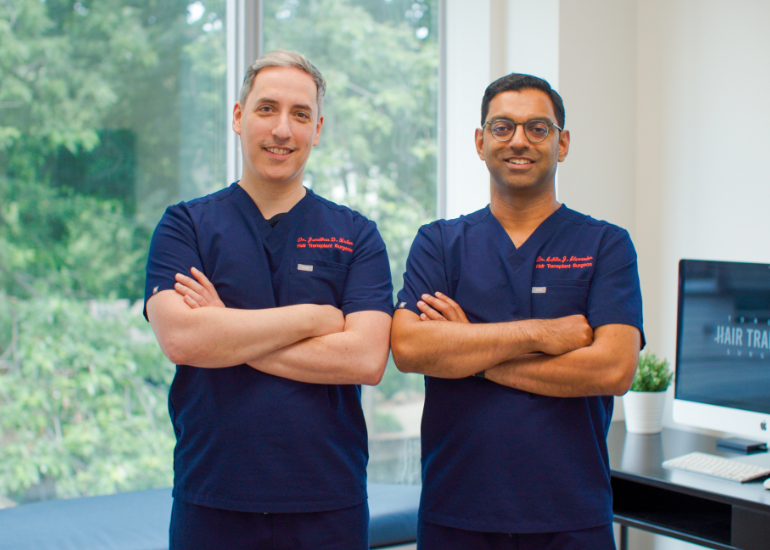
Toronto Hair Transplant Surgeons are internationally known for our pioneering work in hair transplantation.
Hair Loss in Men
Understanding the cause is the first step. Restoring it properly is the next step.
At Toronto Hair Transplant Surgeons, we take a surgeon-led approach to diagnosing and treating male hair loss — combining medical insight with long-term restoration strategies designed for natural, lasting results.
Hair loss in men is common — but the right approach to treating it is not.
Whether you are noticing early thinning, a receding hairline, or advanced crown hair loss, the key is understanding what is driving the change. At our Toronto hair loss clinic, every assessment is guided by a surgeon, ensuring your diagnosis — and your treatment plan — is based on expertise, not assumptions.
What You May Be Experiencing
Hair loss rarely happens all at once. It often begins subtly — and progresses over time.
You may notice:
- A receding hairline or thinning at the temples
- Increased shedding when showering or styling
- Reduced density through the mid-scalp
- Visible crown hair loss
- Hair that feels finer, weaker, or slower to grow
These changes can feel gradual, but they are often part of a defined pattern. Understanding where you are in that progression is critical to choosing the right path forward.
Causes of Hair Loss in Men
Hair loss in men is often progressive, but rarely random. Understanding the underlying cause is the first step toward choosing the right solution.
The most common cause is male pattern baldness — a genetic condition driven by sensitivity to DHT (dihydrotestosterone). This typically presents as a receding hairline, thinning at the crown, or both. However, not all hair loss follows this pattern.
Other contributing factors may include:
- Inflammatory hair loss conditions affecting the scalp
- Stress-related shedding (telogen effluvium)
- Hormonal imbalances or thyroid issues
- Nutritional deficiencies
- Certain medications or medical conditions
At our Toronto hair loss clinic, we approach diagnosis with precision. Rather than assuming a single cause, we assess your scalp health, hair density, and progression pattern to determine what is truly driving your hair loss.
Because when the cause is clearly understood, the path to effective treatment becomes much more predictable.
What causes hair loss?
For men who start losing their hair, one of the first questions on their mind is – why is this happening?
Everyone knows that a certain percentage of men go bald but not everyone knows the scientific reason behind it. It’s easy to blame factors such as stress and poor diet, and whilst they certainly play a role in the health of your hair, they’re not the primary culprit.
The role of DHT
- Dihydrotestosterone (DHT) is a male sex hormone and is the main cause of hair loss. The reason that balding occurs is due to the hair follicle’s sensitivity to DHT, which causes them to shrink, or ‘miniaturize’. Miniaturization causes your hair to grow for shorter periods as well as becoming lighter and finer. This type of hair is often referred to as ‘peach fuzz’.
- The amount of DHT produced in the body varies from one individual to the next. This is why men lose their hair at different rates and to varying degrees. For some men, balding occurs very slowly over a number of years, whilst for others it’s much quicker.
- The most widely used drug to treat hair loss– finasteride, is essentially a DHT inhibitor. It works by blocking the production of DHT at a systemic level and therefore halting the advancement of male pattern balding.
Other causes of hair loss
While DHT is the primary cause of male pattern hair loss, there are other factors that can contribute to hair loss in men. These include:
- Trauma – Hair loss can occur due to physical trauma to the hair, such as wearing tight hairstyles like ponytails or cornrows. Emotional trauma from surgeries, illnesses, or poisoning can also lead to hair loss.
- Medication: Certain medications, particularly those prescribed for blood pressure, heart disease, and diabetes, can cause hair loss as a side effect.
- Nutrition: Poor nutrition can result in weak and thin hair. While complete balding is rare, a diet lacking essential nutrients can contribute to hair loss.
- Thyroid Problems: Hormonal changes caused by thyroid issues can lead to hair loss in both men and women.
- Chronic Stress: Prolonged periods of stress can disrupt the normal hair growth for men and result in hair loss. Stress-related hair loss is usually temporary and can be reversed once the underlying stressor is resolved.
Male Pattern Baldness
Male pattern baldness is the most common form of hair loss in men, affecting the majority at some point in their lives.
It typically begins with subtle changes — a receding hairline, thinning at the temples, or early crown hair loss — and gradually progresses over time.
This condition is genetically influenced and driven by sensitivity to DHT, which causes hair follicles to shrink and produce finer, weaker hairs until growth stops altogether.
While it cannot be “cured,” it can be effectively managed — and in many cases, reversed in appearance — through a combination of medical treatment and surgical restoration.
How to Stop Hair Loss in Men
Stopping hair loss starts with early and accurate intervention.
Depending on the cause, treatment may include:
- Medical therapies such as finasteride or minoxidil
- PRP (Platelet-Rich Plasma) therapy to stimulate follicle activity
- Low-level laser therapy for improved scalp health
- Lifestyle and nutritional adjustments
At a specialized hair loss treatment clinic in Toronto, the focus is not just slowing loss — but preserving and strengthening existing hair.
For many patients, a combination approach delivers the best results. The key is acting early, before hair loss progresses beyond the point where non-surgical treatments can be effective.
Our Results
Toronto Hair Transplant Surgeons are internationally known for our pioneering hair transplantation work.
Our huge archive is here to help you see what we can do for you. Use the link below to view some sample cases.
Treatment Options for Male Hair Loss
The right treatment depends on your stage of hair loss, the cause, and your long-term goals. Our role is to guide you toward the most effective and appropriate solution — not simply the most aggressive one.
Early-Stage: Prevention and Stabilization
- Medical hair loss treatments (minoxidil, finasteride)
- PRP for hair loss
- Low-level laser therapy
These options are designed to slow progression and maintain existing hair.
Moderate Hair Loss: Combination Approach
At this stage, a multi-faceted plan is often required.
Through our Hair Loss Recovery Program, we combine therapies to stabilize loss, improve density, and extend the life of existing follicles — while planning for long-term restoration if needed.
Advanced Hair Loss: Surgical Restoration
For patients with more advanced loss, male hair loss surgery offers a permanent and natural solution.
Learn more about:
- FUE hair transplant procedures
- FUT hair transplant techniques
Every recommendation is made — and every procedure is performed — by a surgeon.
Basics of Men’s Hair Transplant
A male hair loss surgery, such as a hair transplant, is designed to restore your own natural hair in areas where it has thinned or disappeared.
Using advanced FUE or FUT techniques, healthy hair follicles are carefully redistributed from the donor area (typically the back of the scalp) to areas of loss, such as the hairline or crown.
At Toronto Hair Transplant Surgeons, every step is performed by a surgeon — from design to placement — ensuring precision, natural growth patterns, and long-term results.
The goal is simple: restoration that looks completely your own, both today and years from now.
THTS Gallery

Familiarize yourself with our layout before you come in.
Visit the gallery to take a peek at our Oakville based clinic layout and surgical rooms.
Why Choose Toronto Hair Transplant Surgeons for Hair Transplantation
Choosing the right hair loss doctor in Toronto is one of the most important decisions you will make in your hair restoration journey.
At Toronto Hair Transplant Surgeons, our approach is fundamentally different.
Every procedure is surgeon-led from start to finish — not delegated, not rushed, and never treated as a volume-based service. This level of involvement allows us to focus on what matters most: natural results that age well over time.
With over two decades of experience and a history of innovation in FUE techniques, our clinic has become a trusted destination for patients seeking both expertise and honesty.
We also recognize that not every patient is ready for surgery. Through the Hair Loss Recovery Program, we guide patients through non-surgical and preventative options when appropriate — ensuring that every recommendation is aligned with your stage of hair loss and long-term goals.
From consultation to completion, you are working directly with specialists who prioritize craftsmanship, transparency, and your confidence above all else.
FAQs on Hair Loss for Men
What are the reasons for hair loss in males?
Hair loss in men is most commonly caused by genetics (male pattern baldness), but can also result from stress, illness, inflammatory scalp conditions, or nutritional deficiencies.
Summary: Most male hair loss is genetic, but other medical and lifestyle factors can contribute.
How can I stop male hair fall?
The most effective approach depends on the cause. Medical treatments, PRP, and early intervention at a qualified clinic can significantly slow or stabilize hair loss.
Summary: Early diagnosis and treatment are key to stopping or slowing hair loss.
What helps with hair loss?
Clinically proven treatments include minoxidil, finasteride, PRP therapy, and in more advanced cases, hair transplantation. A personalized plan is essential for meaningful results.
Summary: The right combination of treatments delivers the best outcomes.
What is the main deficiency linked to hair loss?
Deficiencies in iron, vitamin D, and certain B vitamins can contribute to hair thinning. However, not all hair loss is deficiency-related.
Summary: Nutritional deficiencies can play a role, but are not always the primary cause.
Why am I losing 1000 hairs a day?
Sudden, excessive shedding may indicate a temporary condition such as telogen effluvium, often triggered by stress, illness, or hormonal changes.
Summary: Sudden shedding is often temporary and reversible.
How do I know if hair loss is from stress?
Stress-related hair loss usually presents as diffuse thinning rather than a defined pattern like male pattern baldness.
Summary: Stress hair loss looks different from genetic hair loss and is often temporary.
Will I go bald with extensive hair loss?
Not necessarily. Hair loss progression varies widely. With early intervention and the right treatment strategy, many patients maintain or restore significant density.
Summary: Hair loss does not always lead to complete baldness.
Your Next Step in Hair Restoration
If you are experiencing hair loss, the most important step is understanding your options.
- Explore our hair transplant procedures
- Learn more about non-surgical treatment options
- Or book a consultation to receive a personalized assessment
We’re here to guide you — with clarity, expertise, and a plan built around you.
Hair Loss Treatments For Men
In the vast majority of cases, balding in men is hereditary and caused by an increase in the production of the hormone dihydrotestosterone (DHT).
Whilst DHT is responsible for the vast majority of cases of male pattern balding, it’s not the only reason why men lose their hair.