

Hair Loss Surgeons Toronto: A Comprehensive Guide to Hair Loss Treatment
About Hair Loss
Hair loss is one of the most common concerns affecting both men and women — but the reasons it happens, and the way it should be treated, are highly individual.
For some, it begins with subtle thinning. For others, it becomes more noticeable through a receding hairline, widening part, or crown baldness. In many cases, it progresses gradually over time without clear answers.
At Toronto Hair Transplant Surgeons, we take a structured, medically guided approach to diagnosing and treating hair loss. Our goal is not simply to offer a solution — it is to understand the cause, the stage, and the most effective path forward for long-term results.
Whether you are just beginning to notice changes or have been dealing with hair loss for years, the first step is clarity.

Male Hair Loss
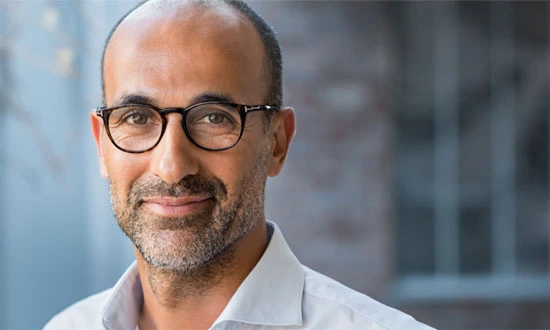
Worldwide, hair loss affects almost 1/3 of the population. On average, a person loses 100 strands of hair a day, and there are many causes of hair loss, including vitamin deficiency, medications, genetics, and stress. If you have noticed an increase in hair fall or a receding hairline, the first thing you should do is see your primary physician to make sure it’s not a sign of a more serious health condition.
Hair Loss Treatments for Women
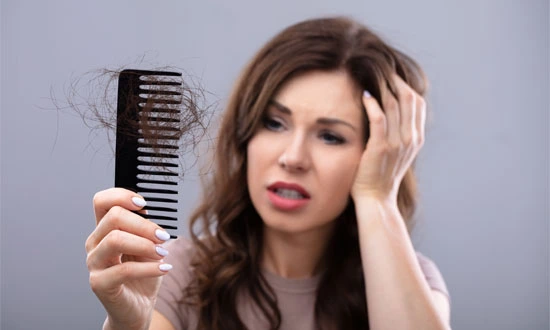
Hair loss can be particularly devastating to women. While male hair loss is seen as inevitable for a large proportion of men in the community, female hair loss is far less common and, therefore less culturally acceptable. This only adds to the stigma for women who experience hair loss. In many cases, the damage to a woman’s self-confidence can affect her whole quality of life.
Guide To Hair Loss
In the majority of cases, balding in men is hereditary and caused by an increase in the production of the hormone dihydrotestosterone. However, there are other things that can cause hair loss. Read on to understand more about your hair loss and potential treatment options.
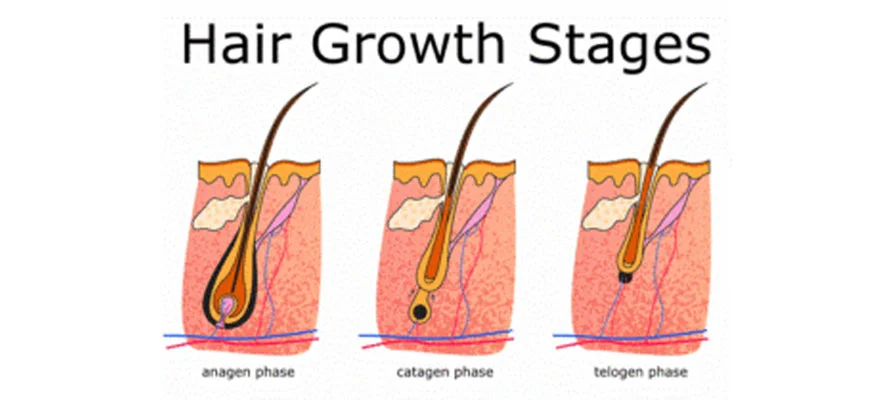
3 Cycles Of Hair Growth
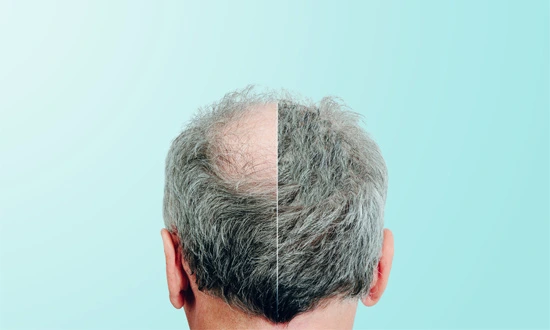
Every month your hair grows around an inch and a half, and believe it or not it moves faster in the summer than in winter. The growth phase, also known as the anagen phase, lasts between 3-5 years. Hair loss, hair thinning and problems with hair growth occur when your growth cycle is disrupted. By having a detailed understanding of the systems we can better recognize and understand the problems associated with hair loss.
Male Pattern Baldness
There are 7 classes of Male Pattern Baldness. The good news is – hair restoration techniques are available to help men in almost all of these stages.
Class 1 Male Pattern Baldness
Hair Loss FAQ's
Collating frequently asked questions simplifies understanding and decision-making regarding hair restoration procedures. Addressing common queries provides clarity and guidance.

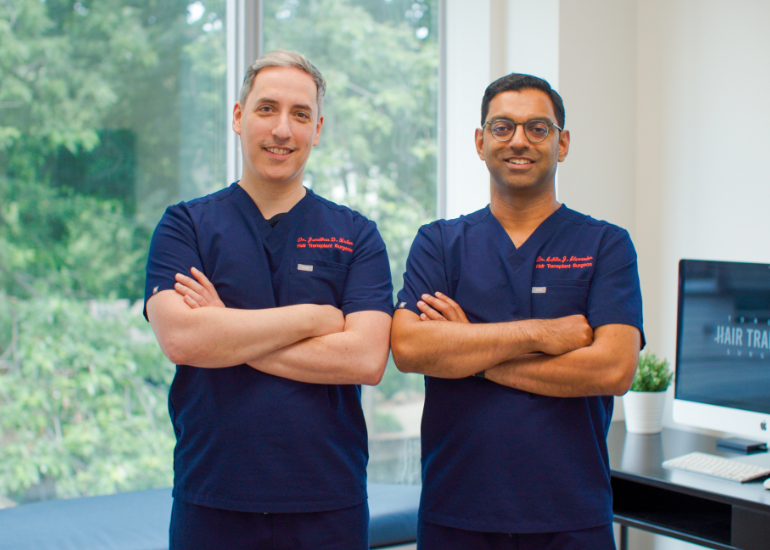
Toronto Hair Transplant Surgeons are internationally known for our pioneering work in hair transplantation.
Hair Loss Causing Thinning Hair & Crown Baldness
Hair loss rarely happens all at once. It typically follows a pattern — and understanding that pattern is key to treating it effectively.
Common signs include:
- Gradual thinning at the hairline
- Increased visibility of the scalp
- Widening part (in women)
- Crown baldness or thinning at the vertex
- Hair that feels finer, weaker, or slower to grow
For many patients, these changes are linked to androgenetic alopecia. However, this is only part of the picture.
There is growing awareness of the role of inflammation and hair loss.
Inflammatory hair loss occurs when the scalp environment becomes disrupted. Chronic inflammation can:
- Shorten the hair growth cycle
- Weaken existing follicles
- Accelerate shedding
- Reduce the overall quality of hair
Chronic inflammation and hair loss may be linked to:
- Scalp conditions
- Hormonal imbalance
- Stress
- Underlying health factors
This is why some patients experience ongoing thinning even when they are using standard treatments.
At our Toronto hair loss clinic, we do not look at hair loss in isolation. We assess:
- Follicle activity
- Scalp condition
- Pattern of loss
- Contributing internal and external factors
Because treating hair loss effectively requires more than identifying where hair is thinning — it requires understanding why.
Why Does Hair Loss Happen?
Hair loss is not caused by a single factor. It is often the result of a combination of genetic, hormonal, and environmental influences.
The most common cause is androgenetic alopecia, which is driven by sensitivity to DHT. This hormone gradually causes hair follicles to shrink, leading to thinner, weaker hair over time.
However, other factors can play a significant role, including:
- Inflammatory hair loss conditions
- Chronic inflammation affecting the scalp
- Thyroid or hormonal imbalances
- Nutritional deficiencies (such as iron or vitamin D)
- Stress or illness
In some cases, multiple factors are involved at the same time.
This is why a proper hair loss consultation is essential. Without understanding the cause, it becomes difficult to choose the right treatment — and easy to waste time on options that may not be effective.
Our Results
Toronto Hair Transplant Surgeons are internationally known for our pioneering hair transplantation work.
Our huge archive is here to help you see what we can do for you. Use the link below to view some sample cases.
Early vs Advanced Hair Loss: How Treatment Changes
Hair loss is not static. It progresses over time — and the way it should be treated changes depending on the stage.
Understanding whether your hair loss is early or advanced is one of the most important factors in choosing the right approach.
Early-Stage Hair Loss
In the early stages, hair follicles are still active but becoming weaker. You may notice:
- Subtle thinning
- Increased shedding
- Reduced density
- Early crown or hairline changes
At this stage, treatment focuses on preservation and stabilization.
Options may include:
- Medical therapy
- PRP treatment
- Scalp health optimization
The goal is to slow progression and maintain as much existing hair as possible.
Moderate Hair Loss
As hair loss progresses, thinning becomes more noticeable. Density is reduced, and certain areas may begin to look visibly sparse.
At this stage, a combination approach is often most effective.
This may include:
- Continued medical therapy
- PRP to support follicle activity
- Planning for future restoration
The focus shifts from prevention alone to both preservation and improvement.
Advanced Hair Loss
In advanced stages, hair follicles in certain areas are no longer active.
At this point:
- Non-surgical treatments cannot restore lost hair
- Surgical hair transplant becomes the most effective option
This is where long-term planning becomes critical.
A well-planned transplant should:
- Restore hair in key areas
- Preserve donor supply
- Account for future hair loss
The earlier a structured plan is created, the more options are available.
THTS Gallery

Familiarize yourself with our layout before you come in.
Visit the gallery to take a peek at our Oakville based clinic layout and surgical rooms.
Hair Loss Treatments for Women & Men
Hair loss affects both men and women, but the patterns and treatment approaches can differ.
For men, hair loss often presents as:
- Receding hairline
- Thinning at the crown
- Progressive loss over time
For women, it more commonly appears as:
- Diffuse thinning across the scalp
- Widening part
- Reduced overall density
At Toronto Hair Transplant Surgeons, we provide a full range of treatments for both men and women, including:
- Medical therapy (finasteride, minoxidil where appropriate)
- PRP therapy for hair restoration
- Low-level laser therapy
- Surgical hair transplantation (FUE and FUT)
Each treatment is selected based on:
- The type of hair loss
- The stage of progression
- The patient’s goals
There is no single “best” treatment. The best treatment is the one that is appropriate for you.
The 3-Step Process for Treating Hair Loss
Treating hair loss effectively requires a structured approach.
Step 1: Diagnosis
Every treatment plan begins with a proper diagnosis.
During your hair loss consultation (https://torontohairtransplant.com/consultation/), we assess:
- Your hair loss pattern
- The condition of your scalp
- Donor hair availability
- Whether follicles are still active
This step is critical. Without it, treatment becomes guesswork.
Step 2: Stabilization
Once the cause is understood, the next step is to stabilize hair loss.
This may include:
- Medical therapy
- Scalp health optimization
The goal is to slow or stop progression before it worsens.
Step 3: Restoration
If hair loss has progressed to the point where follicles are no longer producing hair, restoration may be required.
This can include:
- Surgical hair transplant procedures
- Targeted treatments to improve density
This step is not always necessary — but when it is, timing and planning are essential.
Restore Hair Growth
Restoring hair growth depends on whether the follicles are still active.
If follicles are alive but weakened, treatments such as PRP can help stimulate growth and improve hair quality.
Patients often ask about PRP for hair loss price or how much PRP hair treatment costs. While pricing varies, PRP is typically used as a supportive treatment rather than a replacement for surgery.
If follicles are no longer active, a hair transplant becomes the only way to restore hair in that area.
The key is understanding what stage you are in.
Hair restoration is not about choosing between treatments. It is about choosing the right treatment at the right time.
How Long Does It Take to See Hair Growth Results?
One of the most common misconceptions about hair restoration is how quickly results should appear.
Hair grows slowly — and meaningful improvement takes time.
Whether you are using non-surgical treatment or undergoing a hair transplant, the timeline for results is gradual.
Non-Surgical Treatment Timeline
For treatments such as PRP or medication, most patients can expect:
- Minimal visible change in the first 1–2 months
- Reduced shedding around 2–3 months
- Improved thickness and density at 4–6 months
- Continued improvement over 6–12 months
Consistency is critical. These treatments work by supporting existing follicles, and results depend on continued use.
Hair Transplant Timeline
Hair transplant results follow a different, but equally predictable timeline:
- First 2 weeks: healing phase
- Weeks 2–4: transplanted hairs shed (normal)
- Months 3–4: new growth begins
- Months 6–9: noticeable improvement
- Months 9–12+: final result develops
Patients are often concerned when shedding occurs early on. This is a normal part of the process.
The key is understanding that hair restoration is not immediate — but when done properly, the results are designed to last.
Real Patients. Real Results
Hair restoration is best understood through results.
A successful treatment should:
- Look natural
- Blend seamlessly with existing hair
- Improve density without appearing artificial
- Continue to look appropriate over time
If you are looking for some of our existing patient results, we encourage you to visit our results gallery.
The best results do not look like a procedure. They simply look like you have your hair back.
Non-Surgical Hair Loss Treatment Options
Many patients begin with non-surgical hair restoration.
These options are most effective when hair is thinning but not completely gone.
Common treatments include:
- PRP therapy
- Prescription medications
- Laser therapy
To learn more about these options, visit our non-surgical hair restoration page.
Non-surgical treatment can:
- Slow progression
- Improve density
- Delay or reduce the need for surgery
However, it cannot replace follicles that are no longer active.
Surgical Hair Loss Solutions
For more advanced hair loss, surgical hair replacement may be the most effective solution.
Hair transplant procedures restore hair using your own follicles, creating permanent, natural growth.
At Toronto Hair Transplant Surgeons, your procedure is surgeon-led and surgeon-controlled, from surgical planning and hairline design to graft harvesting and site creation. Your surgeon personally performs the critical surgical steps, while a highly trained technical team assists with graft handling and placement under the surgeon’s direct supervision. This approach ensures precision, safety, and natural results.
Cost of Hair Loss Treatment
The cost of treatment depends on the approach.
Non-surgical treatments may include:
- PRP therapy: typically $500–$1,200 per session
- Medications: ongoing monthly cost
- Laser therapy: device or program-based pricing
Surgical treatments vary depending on:
- Number of grafts
- Procedure type
- Complexity of the case
For a full breakdown, visit our hair transplant cost guide.
The most important consideration is long-term value — not just upfront cost.
Maintaining Hair Loss Treatment Results
Hair restoration is not a one-time decision. It is an ongoing process.
Maintaining results may include:
- Continued use of medical therapy
- Periodic PRP treatments
- Monitoring progression over time
Hair loss can continue if it is not managed.
A long-term plan ensures that results remain stable and natural.
Testimonials – What Our Patients Say
Patient experiences are an important part of understanding the process.
While individual outcomes vary, patients often report:
- Improved confidence
- Natural-looking results
- A better understanding of their hair loss
At Toronto Hair Transplant Surgeons, our focus is on delivering results that patients feel comfortable with — both immediately and long term.
FAQs on Hair Loss
Which vitamin deficiency causes hair loss?
Deficiencies in iron, vitamin D, and certain B vitamins can contribute to hair thinning.
Summary: Nutritional deficiencies can play a role, but are not always the primary cause.
How long does it take for hair to grow back?
Hair growth is gradual. Most treatments take several months before visible improvement occurs.
Summary: Hair restoration requires patience and consistency.
How much hair loss is normal?
It is normal to lose 50–100 hairs per day. Excessive shedding may indicate an underlying issue.
Summary: Some shedding is normal, but patterns matter.
How do you stop hair falling instantly?
There is no instant solution. Effective treatment depends on identifying the cause and following a structured plan.
Summary: Hair loss requires proper diagnosis and treatment.
Can dry scalp cause hair loss?
Dry scalp alone does not usually cause hair loss, but underlying scalp conditions may contribute.
Summary: Scalp health plays a role in overall hair quality.
Why Does Hair Loss Happen?
Hair loss is caused by a combination of genetics, hormones, inflammation, and other health factors.
Summary: Understanding the cause is the first step toward treatment.
Your Next Step
If you are experiencing hair loss, the most important step is understanding what is happening — and what can be done about it.
- Book a hair loss consultation
- Explore treatment options
- Learn which approach is right for your stage of hair loss
We are here to guide you — with clarity, expertise, and a plan built around you.
Contact Us Today
If you are experiencing hair loss and seeking professional treatment, contact our Toronto hair loss clinic today. Our team of experts is dedicated to helping individuals regain their confidence and achieve natural-looking hair restoration. With personalized treatment plans and state-of-the-art technology, we are committed to delivering exceptional results. Don’t let hair loss hold you back; take the first step towards a fuller head of hair by contacting our clinic today.