

About Female Hair Transplant
Hair loss in women is often more complex — and more personal — than it is in men.
It does not always follow a predictable pattern. It may appear as overall thinning, a widening part, or crown thinning. It can be influenced by hormonal changes, health conditions, stress, and genetics.
Because of this, the approach to treating female hair loss must be different.
At Toronto Hair Transplant Surgeons, we take a structured, individualized approach to female hair restoration in Toronto, focused on understanding the cause, the pattern, and the most appropriate long-term solution.
For some women, non-surgical treatment is the right starting point. For others, a carefully planned hair transplant can restore density and confidence in a natural, lasting way.
Female Hair Replacement Surgery
Female hair replacement surgery is designed to restore hair density in areas where follicles are no longer producing hair.
Unlike male hair transplants, female procedures often focus on:
- Diffuse thinning
- Widening part lines
- Crown thinning in women
- Hairline refinement
Because women typically maintain their frontal hairline, the goal is rarely to rebuild from scratch. Instead, it is to increase density in a way that blends seamlessly with existing hair.
A successful hair transplant for women must account for:
- The direction and angle of natural hair growth
- The density of surrounding hair
- Long-term stability of hair loss
- The need to preserve existing follicles
At Toronto Hair Transplant Surgeons, your procedure is surgeon-led and surgeon-controlled, from surgical planning and hairline design to graft harvesting and site creation. Your surgeon personally performs the critical surgical steps, while a highly trained technical team assists with graft handling and placement under the surgeon’s direct supervision. This approach ensures precision, safety, and natural results.
Causes of Female Hair Loss
Hair loss in women is rarely caused by a single factor.
Common causes include:
Hormonal Changes
Hormonal fluctuations related to pregnancy, menopause, or thyroid imbalance can significantly affect hair growth.
Female Pattern Hair Loss
This condition leads to gradual thinning across the scalp rather than a receding hairline. It is one of the most common causes of hair loss in women.
Chronic Inflammation
Inflammation and hair loss are closely linked. Inflammatory conditions can weaken follicles and disrupt growth cycles.
Stress and Illness
Temporary shedding (telogen effluvium) can occur after illness, surgery, or significant stress.
Nutritional Deficiencies
Low levels of iron, vitamin D, or other nutrients can contribute to thinning.
Scalp Conditions
Conditions affecting scalp health can interfere with normal hair growth.
At our hair transplant clinic, we encourage our female patients to have done their best to identify the underlying cause before recommending treatment.
Because without understanding the cause, it is difficult to recommend appropriate solutions that can achieve meaningful, lasting results.
Female Hair Transplant Basics
A female FUE hair transplant involves moving individual hair follicles from a donor area — typically the back of the scalp — to areas of thinning.
Key differences in female procedures include:
- No need to lower the hairline in most cases
- Focus on increasing density rather than coverage
- Careful placement between existing hairs
- Preservation of surrounding follicles
In many cases, women do not need to shave their head. Techniques can be adapted to maintain existing hair during the procedure.
The process typically involves:
- Consultation and diagnosis
- Hairline or density planning
- Follicle extraction
- Precise placement
Results develop gradually over time, with new growth beginning around 3–4 months and continuing to improve over 9–12 months.
The goal is simple: to restore density in a way that looks completely natural.
Who Is a Good Candidate for a Female Hair Transplant?
Not every woman experiencing hair loss is a candidate for surgery.
You may be a good candidate if:
- Hair loss is stable
- You have sufficient donor hair
- You have localized thinning rather than diffuse loss
- You want a permanent solution
You may not be an ideal candidate if:
- Hair loss is still actively progressing
- Thinning is widespread across the entire scalp
- Underlying medical conditions are not yet treated
In many cases, treatment begins with non-surgical options.
At Toronto Hair Transplant Surgeons, we guide patients toward the right decision — not simply the fastest one.
Female Hairline Restoration & Crown Thinning Treatment
Many women seek treatment for specific areas:
Hairline Restoration
Some patients experience thinning along the hairline or temples.
Female hairline restoration focuses on:
- Subtle refinement
- Natural density
- Age-appropriate design
Crown Thinning in Women Toronto
Crown thinning is a common concern.
Unlike men, women typically maintain hair but lose density.
Treatment may include:
- PRP therapy
- Medical treatment
- Hair transplant for density restoration
The approach depends on whether follicles are still active.
How to Fix Thinning Hair in Women Toronto
Treatment depends on the stage of hair loss.
Early Stage
- PRP therapy
- Medical treatment
- Lifestyle adjustments
Moderate Stage
- Combination therapy
- Ongoing monitoring
Advanced Stage
The key is timing.
Early intervention provides more options and often leads to better outcomes.
Benefits of Hair Transplant for Women
1. Restoring Hair Loss and Thickening Hair
A female hair transplant offers the opportunity to restore a natural-looking hairline and thicken the hair, resulting in a fuller and more youthful appearance.
2. Confidence Boost
Thinning hair can have a significant impact on a woman’s self-image and confidence. A successful hair transplant can fill in troublesome thinning areas, providing a significant boost in self-esteem.
3. Minimal Downtime
Compared to traditional strip graft methods, female hair transplants using techniques like Follicular Unit Excision (FUE) have minimal downtime. The initial recovery period typically lasts only 2 to 3 days, with mild pain and discomfort that subside quickly.
4. Permanent Hair Loss Solution
Female hair transplant surgery offers a permanent solution to hair loss. Since the transplanted hair follicles are taken from healthy sites at the back and sides of the head, they are genetically resistant to hair loss and will continue to grow naturally.
Different Types of Surgical Female Hair Transplants
During the initial consultation, the Toronto Hair Transplant Surgeons will determine the most suitable hair restoration technique based on each patient’s unique pattern of hair loss and factors like the quality and number of healthy donor hair follicles. Two existing methods of hair restoration surgeries for women are:
1. FUE (Follicular Unit Excision)
Follicular unit excision (sometimes referred to as extraction) is one of the two main types of hair transplant procedure performed today – the other being FUT (follicular unit transplant). In an FUE procedure, individual units of follicles are taken from the back and sides of the head and transplanted to the thinning areas.
2. FUT (Follicular Hair Transplant) or Strip Surgery
FUT strip surgery is often the best choice for female patients with extensive hair loss who require a large number of grafts. It is the best way to get the maximum number of healthy grafts within the same procedure.
Though the procedure does leave a small linear scar across the back of the head, the scar is usually minimized by a skilled surgeon. While this can become visible if someone wears their hair very short, it is usually covered by hair and hidden from sight.
Hair Replacement for Women: Non-Surgical Alternatives for Female Hair Loss
Apart from hair transplants, women have several other alternatives for managing female hair loss. Many factors contributing to hair loss in women respond well to non-surgical hair restoration programs. These alternatives include:
1. Low-level light laser therapy
Low-level light laser therapy stimulates hair follicles, making them more resistant to hair loss and stimulating the growth phase. This non-invasive treatment option can improve hair density and promote regrowth.
2. Caffeinated Shampoo
A shampoo containing stimulants and nutrients can be used to help stimulate blood flow to the scalp and boost the fullness of existing hair. This helps nourish the hair follicles and stimulate growth.
3. Minoxidil
Topical serums containing minoxidil can be applied to the scalp. This treatment increases blood supply and helps prevent further hair loss.
4. Injectable Growth Factors and Bio-stimulants (Platelet Rich Plasma – PRP)
Growth factors in the patient’s own blood can be injected into the scalp to revive dormant hairs and minimize ongoing hair loss.
Preparing Ladies for Hair Transplant
To ensure a successful female hair transplant, specific instructions should be followed to aid recovery. Prior to the procedure:
- Avoid anti-inflammatory medications for at least one week.
- Refrain from consuming alcohol and smoking for one week.
- Avoid eating after midnight on the night before the surgery.
On the day of the surgery, thoroughly wash the hair with shampoo and conditioner.
Post-FUE Female Hair Transplant Surgery Recovery
Compared to traditional strip graft methods, female hair transplants using FUE offer faster recovery times and minimal discomfort. The recovery process typically follows this timeline:
- Day 2-3: Mild pain and discomfort subside, allowing low-impact daily activities to be resumed.
- Day 3-4: Swelling begins to subside or has resolved completely.
- Day 5-7: Most patients can return to work.
- Week 4: Regular exercise activities can be resumed.
It’s important to note that final results may take up to 12-18 months to fully manifest. The success rate of hair transplant results for women is generally high when performed by experienced surgeons. However, individual factors like health, post-operative care, and adherence to aftercare instructions can influence outcomes.
Hair Transplant After Care
Recovery after a female hair transplant is typically straightforward.
First 7–10 Days
- Mild redness and scabbing
- Healing of donor and recipient areas
First Month
- Shedding of transplanted hairs (normal)
3–4 Months
- New growth begins
6–12 Months
- Density improves
- Final result develops
Aftercare instructions are provided to:
- Protect grafts
- Support healing
- Optimize results
Because existing hair remains, careful handling during recovery is especially important.
Real Patient Experience
For many women, hair loss is not just cosmetic — it is emotional.
Patients often describe:
- Loss of confidence
- Difficulty styling hair
- Frustration with ineffective treatments
A successful hair transplant can:
- Restore density
- Improve hair styling options
- Rebuild confidence
If you are interested in seeing results, visit our results gallery
The best outcomes are subtle — and that is exactly the goal.
Why Choose Toronto Hair Transplant Surgeons
Choosing the right clinic is one of the most important decisions you will make.
At Toronto Hair Transplant Surgeons:
Surgeon-Led Approach
Your procedure is surgeon-led and surgeon-controlled, ensuring precision and accountability.
Experience in Female Hair Restoration
Female hair loss requires a different approach than male hair loss.
Natural Results
We focus on density and blending, not obvious transformation.
Long-Term Planning
Hair loss can evolve. We plan for the future, not just the present.
Honest Guidance
Not every patient needs surgery — and we will tell you if that is the case.
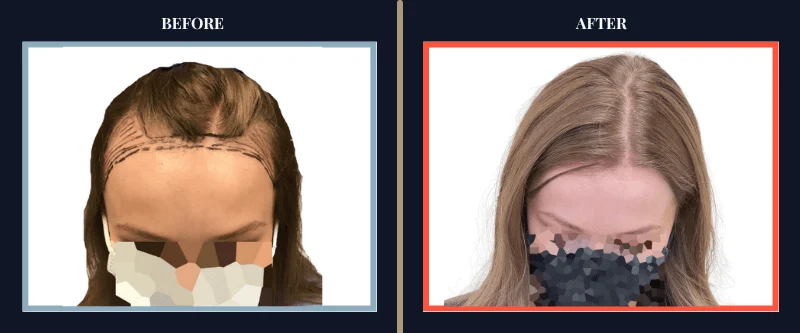
Hair Transplant for Women Before and After Toronto
Before and after results demonstrate:
- Improved density
- Natural blending
- Realistic outcomes
Unlike male procedures, the goal is not generally a dramatic change — it is subtle, believable improvement.
Consistency across cases is what matters most.
Cost of Female Hair Transplant Toronto
Hair transplant cost depends on:
- Number of grafts
- Area treated
- Complexity
Typical pricing:
- Smaller cases: $6,000–$10,000
- Moderate cases: $10,000–$18,000
For full details, visit our cost guide
FAQs on Female Hair Transplant
How expensive is a hair transplant for women?
Costs typically range from $6,000 to $18,000 depending on graft count and complexity.
Summary: Pricing is individualized.
Is a female hair transplant worth it?
For the right candidate, it provides a permanent, natural solution.
Summary: Results can be highly impactful.
How many grafts for female hair transplant?
Most procedures range from 1,000–2,500 grafts.
Summary: Depends on density goals.
Is a female hair transplant painful?
The procedure is performed under local anesthesia and is well tolerated.
Summary: Discomfort is minimal.
How long does a female hair transplant take?
Typically one full day depending on graft count.
Summary: Duration varies by case.
Do you have to shave your head?
Not always. Many procedures are performed without full shaving.
Summary: Hair can often be preserved.
What is the success rate?
Modern procedures have high success rates when properly performed.
Summary: Technique and planning are key.
How long after a hair transplant can I get a haircut?
Usually after 3–4 weeks for the recipient area.
Summary: Timing depends on healing.
What is the best age?
There is no fixed age — stability of hair loss is more important.
Summary: Timing depends on your condition.
What questions should I ask my surgeon?
You should ask about:
- Experience with female patients
- Long-term planning
- Expected results
- Risks and limitations
Summary: An informed patient makes better decisions.
Your Next Step
If you are experiencing hair loss, the most important step is understanding what is possible.
- Book a consultation
- Explore treatment options
- Get a personalized plan
We are here to guide you — with expertise, care, and a plan built around you.