



If you’ve been researching hair loss treatments, you’ve likely come across Platelet-Rich Plasma (PRP) therapy. It has become one of the most widely discussed non-surgical treatments for thinning hair—but understanding what it actually does, who it’s best suited for, and what results you can realistically expect isn’t always straightforward.
PRP therapy uses a concentrated portion of your own blood—rich in naturally occurring growth factors—to stimulate weakened hair follicles and support healthier hair growth. It is most effective for men and women experiencing early to moderate hair loss and is often used alongside other treatments, including hair transplantation, to help improve long-term outcomes.
While PRP is not a cure for hair loss and cannot restore hair in completely bald areas, it can be an effective option for slowing progression, improving hair quality, and extending the life of existing follicles when used in the right patient.
In this guide, we’ll explain:
- What PRP therapy is
- How PRP works for hair loss
- Who may benefit most from treatment
- How many treatments are typically recommended
- What to expect before, during, and after treatment
- How PRP compares with other hair restoration options
- When PRP may be an appropriate part of your long-term hair restoration plan
Key Takeaways
PRP Hair Treatment at a Glance
- PRP (Platelet-Rich Plasma) therapy is a non-surgical treatment that uses concentrated growth factors from your own blood to help stimulate existing hair follicles.
- It is generally most effective for men and women experiencing early to moderate hair thinning, rather than complete hair loss.
- Most patients begin with an initial series of treatments followed by maintenance sessions to help support long-term hair health.
- Results develop gradually. Many patients notice reduced shedding before improvements in hair thickness and overall hair quality become apparent.
- PRP may be used as a standalone treatment or combined with medications, low-level laser therapy, or hair transplantation as part of a comprehensive hair restoration strategy.
What Is PRP Hair Treatment?
For many people, hair loss doesn’t happen overnight. It often begins gradually—perhaps a widening part, increased shedding in the shower, or a hairline that seems just a little different each year. During these early stages, the goal isn’t necessarily to replace lost hair. It’s to preserve and strengthen the hair you still have.
This is where Platelet-Rich Plasma (PRP) therapy has become an increasingly important part of modern hair restoration.
PRP hair treatment is a regenerative medical procedure that uses a concentrated portion of your own blood to support the health and function of existing hair follicles. Rather than introducing medications or foreign substances into the body, PRP harnesses naturally occurring growth factors already present within your bloodstream.
Your blood contains four primary components:
- Red blood cells
- White blood cells
- Plasma
- Platelets
While platelets are best known for helping the body heal after an injury, they also contain numerous proteins and biological growth factors involved in tissue repair, cellular communication, and regeneration.
During a PRP hair treatment, a small sample of blood is collected and processed using a medical centrifuge. This process concentrates the platelet-rich portion of the plasma, creating a solution with a significantly higher concentration of platelets than would normally circulate in your blood.
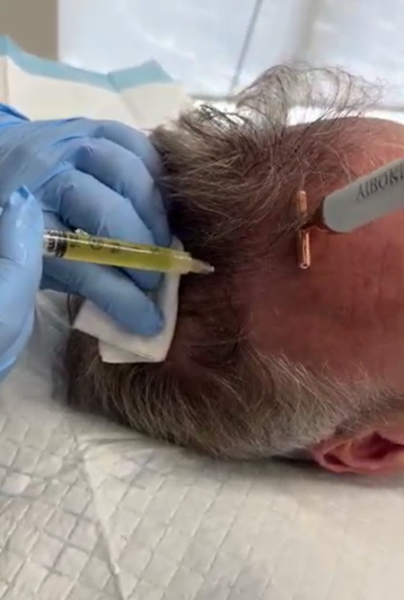
That concentrated plasma is then carefully injected into areas of the scalp experiencing hair thinning.
The objective is not to create new hair follicles. Instead, PRP is intended to improve the environment surrounding existing follicles—particularly those that have become weakened or miniaturized by androgenetic alopecia (male or female pattern hair loss) or other forms of non-scarring hair thinning.
For appropriate candidates, PRP therapy may help:
- Improve the quality and thickness of existing hair
- Reduce active hair shedding
- Support healthier follicle function
- Extend the active growth (anagen) phase of the hair cycle
- Complement other medical and surgical hair restoration treatments
Because PRP uses your own blood, there is minimal risk of allergic reaction or rejection, making it an attractive option for patients looking for a natural, minimally invasive approach to managing hair loss.
However, it’s equally important to understand what PRP cannot do.
PRP is not a cure for hair loss, nor can it restore hair in areas where follicles are no longer viable. If a scalp has been completely bald for many years, there may simply be too few functioning follicles remaining for PRP to stimulate. In these situations, other treatment options—such as hair transplantation—may be more appropriate.
This distinction is one of the reasons a thorough assessment is so important. Understanding the stage of your hair loss, the health of your donor hair, and your long-term goals helps determine whether PRP should be used as a primary treatment, a maintenance strategy, or as part of a broader hair restoration plan.
The Surgeon’s Perspective
One of the most common misconceptions we hear is that PRP “grows new hair.”
That’s not how the treatment works.
PRP cannot create new follicles where none exist. Instead, its purpose is to improve the health and performance of follicles that are still alive but producing finer, weaker hairs.
Think of it as supporting the follicles you still have—not replacing the ones that have already disappeared.
This is also why timing matters.
Patients who begin treatment while hair thinning is still in its earlier stages often have more follicles capable of responding to treatment. Waiting until significant hair loss has already occurred may limit what PRP alone can realistically achieve.
One of the most valuable parts of a consultation isn’t determining whether PRP works—it’s determining whether PRP is the right treatment for your stage of hair loss.
How Does PRP Therapy Work for Hair Loss?
Hair follicles are remarkably active biological structures. Throughout your lifetime, each follicle repeatedly cycles through phases of growth, transition, rest, and shedding. Healthy follicles continue this cycle for decades, while follicles affected by hereditary hair loss gradually become smaller, produce finer hairs, and spend less time actively growing.
PRP therapy is designed to support these weakened follicles before they become permanently inactive.
The treatment begins with a simple blood draw, similar to a routine laboratory test. That blood is then placed into a centrifuge, which spins at high speed to separate its individual components. The platelet-rich portion of the plasma is isolated because it contains a concentrated collection of naturally occurring growth factors involved in tissue repair and healing.
When carefully injected into areas of thinning hair, these growth factors are believed to help create a healthier environment around existing follicles. Although researchers continue to study the precise biological mechanisms, current evidence suggests that PRP may improve blood supply to the follicle, encourage cellular activity within the hair bulb, and help prolong the hair’s active growth phase.
The result isn’t an overnight transformation. Hair grows slowly, and follicles respond gradually. Most patients experience changes over a period of several months rather than weeks, making realistic expectations an important part of the treatment process.
The next section explores who is most likely to benefit from PRP therapy—and why selecting the right candidate is just as important as the treatment itself.
Who Can Benefit from PRP Therapy?
One of the reasons PRP therapy has become such an important part of modern hair restoration is its versatility. While it isn’t the right solution for every type of hair loss, it can be an effective treatment for a wide range of patients when used appropriately.
PRP is most commonly recommended for individuals experiencing early to moderate hair thinning, particularly when hair follicles are still active but beginning to weaken. At this stage, the goal is often to preserve existing hair, improve hair quality, and slow the progression of further loss rather than replace hair that has already disappeared.
Men experiencing male pattern baldness (androgenetic alopecia) are among the most common candidates for PRP therapy. As follicles gradually miniaturize under the influence of genetics and hormones, PRP may help support healthier follicle function and improve the appearance of existing hair.
Women experiencing female pattern hair loss may also benefit. Because women often experience diffuse thinning rather than isolated bald patches, strengthening existing follicles can lead to noticeable improvements in density and overall hair quality.
PRP may also be considered for patients experiencing:
- Early stages of hereditary hair loss
- Diffuse thinning throughout the scalp
- Increased hair shedding following periods of stress or illness (when appropriate)
- Hair thinning after pregnancy, once underlying hormonal changes have stabilized
- Hair transplant patients seeking to support healing and graft maturation
- Individuals looking to complement medical therapies such as Minoxidil or Finasteride
Although PRP is frequently discussed as an alternative to surgery, it is often most valuable as part of a comprehensive hair restoration strategy. Combining treatments allows each therapy to address different aspects of hair loss while supporting long-term maintenance of existing hair.
Ultimately, the most successful outcomes occur when treatment is selected based on the underlying cause of hair loss—not simply because a treatment is popular.
Who Is the Right Candidate for PRP Therapy?
Determining whether PRP is appropriate begins with one simple question:
Are the hair follicles still capable of responding?
This is one of the most important factors influencing treatment success.
PRP works by supporting follicles that are still alive but functioning less efficiently. If those follicles remain active, PRP may help improve their performance. If they have already disappeared, there is little remaining tissue for the treatment to stimulate.
For that reason, ideal candidates typically include patients who:
- Have noticed thinning hair rather than complete baldness
- Are seeking to slow ongoing hair loss
- Want a non-surgical treatment option
- Have realistic expectations regarding outcomes
- Are committed to following an individualized treatment plan, including maintenance sessions when appropriate
Conversely, PRP may be less effective for patients with advanced hair loss where large areas of the scalp no longer contain functioning follicles. In these situations, surgical hair restoration or a combination approach may provide more meaningful improvement.
Medical history also plays an important role. Certain health conditions, medications, or blood disorders may influence whether PRP is recommended. This is one reason why a comprehensive consultation and medical assessment should always precede treatment.
Rather than asking whether PRP works, experienced hair restoration surgeons first ask whether PRP is likely to work for this particular patient.
That distinction helps establish realistic expectations and ensures treatment recommendations are based on clinical judgement rather than a one-size-fits-all approach.
The Surgeon’s Perspective
One of the most common reasons patients are disappointed with PRP isn’t because the treatment failed—it’s because it wasn’t the appropriate treatment to begin with.
PRP has developed a reputation as a solution for almost every type of hair loss. In reality, different causes of hair loss require different treatment strategies.
An accurate diagnosis is often just as important as the treatment itself.
Before recommending PRP, we first want to understand why hair loss is occurring. Only then can we determine whether PRP should be used alone, combined with other therapies, or whether another treatment option may provide a better long-term outcome.
Benefits of PRP Hair Restoration
Patients often ask what improvements they should realistically expect from PRP therapy.
While every individual’s response is different, the benefits typically extend beyond simply encouraging hair growth.
For many patients, the first noticeable change is a reduction in active shedding. Over time, hair may begin to feel stronger, appear fuller, and develop improved texture as healthier follicles produce thicker hair shafts.
Potential benefits of PRP therapy may include:
- Reduced hair shedding
- Improved hair thickness and calibre
- Healthier scalp environment
- Increased density in areas of diffuse thinning
- Minimal downtime following treatment
- A natural treatment using your own biological material
- Compatibility with medications and other non-surgical therapies
- Support for transplanted grafts following hair restoration surgery
One advantage of PRP is its flexibility. It may be used as a standalone treatment for appropriate candidates or incorporated into a broader hair restoration plan that evolves over time as your needs change.
Because PRP relies on your body’s own healing mechanisms, improvements tend to occur gradually rather than dramatically. This gradual progression often produces natural-looking changes that are difficult for others to identify as the result of treatment.
Patients frequently tell us that friends or family notice they look healthier or younger without immediately recognizing why.
The PRP Treatment Process
Understanding what happens during a PRP appointment can help remove much of the uncertainty surrounding treatment.
The process itself is relatively straightforward and typically takes less than an hour from start to finish.
Treatment begins with a consultation to confirm that PRP remains appropriate for your current stage of hair loss and to review any changes in your medical history.
A small blood sample is then collected, similar to a routine laboratory blood draw. That sample is placed into a specialized centrifuge where it is processed to isolate the platelet-rich plasma.
Once prepared, the PRP is carefully injected into the areas of the scalp experiencing thinning. Depending on the treatment plan, multiple small injections are used to distribute the plasma throughout the targeted region.
Most patients tolerate the procedure well. While individual comfort levels vary, the treatment is generally well tolerated and any discomfort is typically brief.
Following treatment, patients are usually able to return to most normal daily activities. Your surgeon will provide individualized aftercare instructions, including guidance on washing your hair, exercise, and when to resume any topical hair loss medications.
Because PRP works by stimulating biological processes within the follicle, improvements occur gradually over the weeks and months that follow rather than immediately after treatment.
How Many PRP Treatments Are Needed?
One of the most common questions patients ask is how many PRP treatments they will need before seeing results. While there is no single answer that applies to everyone, PRP should generally be viewed as a treatment program rather than a one-time procedure.
Hair loss is an ongoing biological process. Just as hereditary hair loss develops gradually over many years, improving the health of weakened follicles also takes time. For this reason, treatment recommendations are typically structured in phases.
Most patients begin with an initial series of treatments performed several weeks apart. This allows repeated stimulation of the hair follicles during the early stages of therapy. Once this initial phase is complete, maintenance treatments are often recommended at regular intervals to help support long-term follicle health.
The exact schedule depends on several factors, including:
- The type and severity of hair loss
- Your age and overall health
- Whether PRP is being combined with medications or other therapies
- How your hair responds during the initial treatment series
- Your long-term hair restoration goals
Some patients respond more quickly than others. Likewise, some patients benefit from more frequent maintenance while others are able to maintain their results with less frequent treatments.
Rather than following a rigid protocol, PRP treatment should be individualized. Ongoing assessment allows recommendations to evolve as your hair responds over time.
An important part of successful treatment is consistency. Patients who complete the recommended treatment plan and continue with maintenance when appropriate generally experience more predictable long-term outcomes than those who discontinue treatment after a single session.
What to Expect After Treatment
One of the reasons many patients choose PRP therapy is that recovery is typically straightforward. Because the treatment uses your own blood and does not involve surgery, there is very little downtime.
Immediately following treatment, it’s normal to experience mild tenderness, redness, or a sensation similar to a minor sunburn in the treated areas of the scalp. These effects generally resolve within a day or two.
Most patients return to work and their normal daily routine immediately or within 24 hours, although your surgeon may recommend avoiding strenuous exercise, swimming, or activities that cause excessive sweating for a short period following treatment.
Hair restoration, however, requires patience.
Unlike cosmetic procedures that produce immediate visible changes, PRP works by supporting the biology of the hair follicle. As a result, improvements develop gradually as existing hairs complete their normal growth cycle.
While every patient progresses differently, a typical timeline may look something like this:
First Month
Some patients notice a reduction in active shedding. Others may not observe any visible changes yet, which is entirely normal.
Three to Four Months
Early improvements in hair texture, thickness, and overall hair quality often begin to appear.
Six Months
Many patients begin noticing increased density in areas of thinning, particularly when treatment has been combined with other components of a comprehensive hair restoration plan.
Beyond Six Months
With appropriate maintenance, many patients continue to enjoy healthier, fuller-looking hair while slowing the progression of ongoing hair loss.
It’s important to remember that PRP aims to improve existing hair rather than dramatically alter your appearance. The most successful outcomes are often the ones that look completely natural.
Clinical Perspective
One of the most rewarding comments we hear from patients isn’t, “My hair looks completely different.”
It’s, “People keep telling me I look healthier, but they can’t quite figure out why.”
That’s often the goal of successful hair restoration.
Rather than creating an obvious transformation, PRP frequently produces gradual improvements that help existing hair look healthier, fuller, and more youthful over time.
Natural-looking results are rarely dramatic overnight changes—they’re subtle improvements that accumulate over months.
Frequently Asked Questions
Does PRP really work for hair loss?
Research suggests that PRP may improve hair density, reduce shedding, and enhance hair thickness in appropriately selected patients. Like any medical treatment, results vary depending on the cause and stage of hair loss, overall health, and adherence to the recommended treatment plan.
Is PRP hair treatment painful?
Most patients describe PRP therapy as very manageable. Because the treatment involves a series of small injections into the scalp, some temporary discomfort can occur. Your treatment team will discuss options to maximize comfort throughout the procedure.
How much does PRP hair treatment cost in Toronto?
The cost of PRP treatment varies depending on the number of sessions recommended, the treatment protocol, and whether PRP is being combined with other therapies. During your consultation, you’ll receive a personalized treatment plan outlining the recommended approach and associated costs.
Can PRP replace a hair transplant?
Not always.
PRP and hair transplantation serve different purposes. PRP is designed to strengthen and preserve existing follicles, while hair transplantation redistributes healthy follicles into areas where hair has already been lost.
For some patients, PRP may delay the need for surgery. For others, combining PRP with hair transplantation provides the most comprehensive long-term strategy.
Can women benefit from PRP therapy?
Yes. PRP may be an effective option for many women experiencing diffuse hair thinning or female pattern hair loss, provided the underlying cause of hair loss is appropriate for treatment.
When will I begin seeing results?
Most patients begin noticing early improvements after several months rather than several weeks. Because hair grows gradually, patience and consistency are essential components of successful treatment.
Conclusion
Hair loss rarely has a single solution, and that’s one of the reasons PRP has become an important part of modern hair restoration. Rather than replacing hair that has already been lost, PRP focuses on supporting the health of existing follicles and creating the conditions for stronger, healthier hair growth.
For the right candidate, it can be an effective standalone treatment. For others, it may work best as part of a comprehensive strategy that includes medical therapy, low-level laser therapy, or hair transplantation. The key is understanding which approach best matches your individual pattern of hair loss and your long-term goals.
Perhaps the most important takeaway is that successful hair restoration begins with an accurate assessment—not with selecting a treatment.
Every patient experiences hair loss differently, and no two treatment plans should be identical.
If you’re beginning to notice thinning hair or wondering whether PRP therapy may be appropriate for you, a consultation with an experienced hair restoration surgeon can help you better understand your options. Together, you can develop a personalized treatment plan based on your stage of hair loss, your goals, and the treatments most likely to provide meaningful, long-term results.
At Toronto Hair Transplant Surgeons, our goal is not simply to recommend a procedure. It’s to help you make an informed decision based on sound medical advice, realistic expectations, and a treatment plan designed specifically for you.