

FUE Hair Transplant
There’s a good deal of debate in the hair-loss community about which transplant method is better – FUE or FUT. The truth is there is no single right answer, as a lot depends on the severity of the patient’s hair loss and how many grafts are needed. There are some key benefits FUE hair transplant Torontoprovides which makes them the more popular choice among patients right now.
A hair transplant is not just about restoring hair — it is about restoring confidence in a way that looks completely natural.
At Toronto Hair Transplant Surgeons, our FUE hair transplant in Toronto is performed entirely by surgeons — ensuring precision, artistry, and long-term results that evolve naturally with you.
If you are considering the best FUE hair transplant Toronto has to offer, understanding the process, outcomes, and expectations is the first step.

- Home
- Hair Loss Solutions
- Surgical Hair Loss Solutions
- FUE Follicular Unit Excision
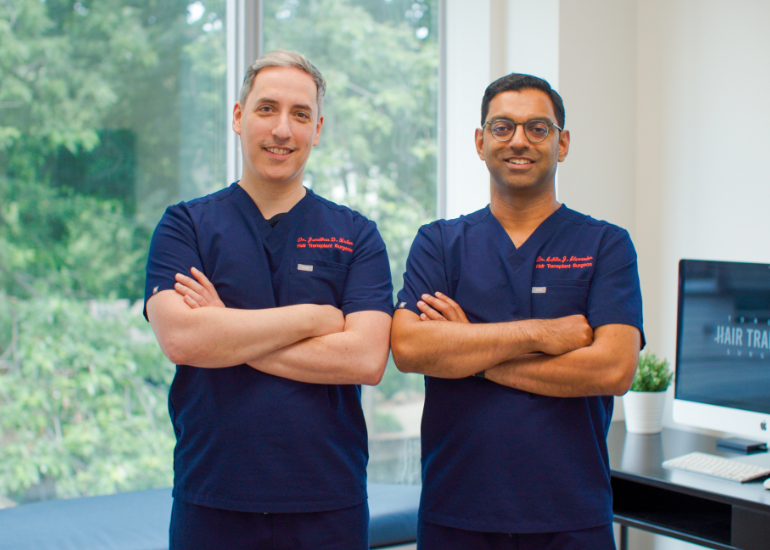
Toronto Hair Transplant Surgeons are internationally known for our pioneering work in hair transplantation.
About FUE Hair Transplant
FUE (Follicular Unit Extraction) is an advanced hair restoration technique that involves extracting individual hair follicles from a donor area — typically the back or sides of the scalp — and transplanting them into areas of thinning or loss.
Unlike older methods, FUE does not require a linear incision. Instead, follicles are removed one by one, allowing for a minimally invasive approach and a more discreet recovery.
The success of an FUE hair transplant depends on far more than the technique itself. It requires:
- Precise donor area management
- Strategic hairline design
- Natural angle and direction of placement
At Toronto Hair Transplant Surgeons, every step is performed by a surgeon. This level of involvement is what separates a standard result from a truly natural one.
Key questions to ask yourself
The truth is that FUE hair transplants are not suitable for everybody. To help decide if you’re a suitable candidate, below are some extremely important questions to ask yourself –
- How much does your hair loss bother you? – Because hair loss is often touted to be one of the worst things that can happen to a person, it’s easy to let this perception cloud your own thinking. The truth is that not everyone reacts in the same way to hair loss. Some see it as the end of the world; and others accept it with some dose of inevitability. Some men actually don’t mind the thought of shaving their head. Try to think about how you feel about it personally away from anyone else’s input.
- How severe is your hair loss? – If your hair loss is very mild or has only just started then you’re probably not a good fit for a hair transplant. The reason for this is that a hair transplant will not do anything to prevent hair that you were already going to lose from thinning. This can result in an uneven appearance to your hair that’s less than desirable.
- Have you given treatments a try? – If your hair loss has only just occurred then the first thing you should do is give proven treatments a try. Finasteride and minoxidil can be very effective at preventing further hair loss so you should always see what your results are like with these treatment options before you look into a hair transplant.
- Have you discussed it with your family and friends? – Hair loss might not be a subject you’re comfortable discussing. However, having a chat with close family members and friends can be a great way to get a new perspective on whether or not a hair transplant is right for you.
Understanding Follicular Unit Excision
There’s a good deal of debate in the hair-loss community about which transplant method is better – FUE or FUT. The truth is there is no single right answer, as a lot depends on the severity of the patient’s hair loss and how many grafts are needed. There are some key benefits FUE hair transplants provide which makes them the more popular choice among patients right now.
What is FUE Hair Transplant?
Follicular Unit Extraction (FUE) is a surgical procedure that involves extracting individual hair follicles from one part of your body and transplanting them to another area where hair is thinning or absent. FUE has gained popularity due to its ability to avoid the “hair plugs” look associated with older hair transplant techniques like FUT.
During the FUE procedure, surgeons use micropunches to extract single follicles, leaving behind minimal signs of extraction. This method allows for a more precise and natural-looking outcome.
Our Results
Toronto Hair Transplant Surgeons are internationally known for our pioneering hair transplantation work.
Our huge archive is here to help you see what we can do for you. Use the link below to view some sample cases.
THE PROCEDURE
FUE is a very delicate procedure and therefore must be performed by someone with a lot of skill and experience. In order to extract the follicular units from the back of the head, a combination of a sharp punch and dull punch is used. The sharp punch is first used to score the skin around the unit that’s going to be extracted. The dull punch is then used to go deeper into the surrounding soft tissue of the follicular unit. The reason both a sharp and punch and a dull punch are used is to retain the quality of the follicles. If a sharp punch was used to score the skin, it could easily sever the underlying unit. Once the unit has been separated from the surrounding soft tissue, the follicles can then be extracted. The small holes that are left in the back of the head typically take a few days to heal and the scars that are left behind are usually invisible to the human eye.
Effectiveness of FUE Hair Transplant
After undergoing FUE hair transplant, the transplanted hair typically begins growing back within 3 to 4 months. You can expect around 80 to 90 percent of the transplanted hair to grow back, making the hair in the new area appear thicker.
FUE hair transplants are most commonly performed on the scalp, but they can also be done on other parts of the body where hair is thin or absent. It’s important to note that the final outcome may vary, and the transplanted hair may not grow back as thick as expected in some cases.
The Advantages of FUE
No visible scarring – Perhaps the biggest benefit of FUE is that it doesn’t leave any visible scars. There are tiny scars where the hair is extracted but they cannot be compared to the scar that is typically left behind from a FUT procedure. Ideal for early-stage hair loss – FUE is great for patients that are in the early stages of hair loss, since less coverage is required, and the best quality follicles can be used.
Great for patients who wish to shave their head – Not everyone who gets a hair transplant wants to grow their hair long. With an FUE procedure, you have the option to either grow your hair or shave your head. Because there’s no visible scarring, you can shave your head without feeling self-conscious.
Completely natural-looking results – FUE hair transplants provide completely natural-looking results thanks to the refined techniques that are used to extract and transplant the hair.
Less invasive than FUT – Another thing that makes FUE more appealing to a lot of people is that the process is less invasive. With a FUT procedure, a strip of skin is cut from the back of the head. With FUE, it’s a much more delicate and less invasive process.
THTS Gallery

Familiarize yourself with our layout before you come in.
Visit the gallery to take a peek at our Oakville based clinic layout and surgical rooms.
Here are the advantages offered by the FUE hair transplantation procedure over similar methods:
- Ideally suited for people who like to sport shorter hair.
- Minimized scarring in the donor area.
- Faster healing and recovery time.
- Reduced limitations after the procedure.
- The best and easiest alternative when a strip excision cannot be performed on the scalp.
LISTED BELOW ARE SOME OF THE DISADVANTAGES ASSOCIATED WITH THE FUE PROCEDURE:
- Wider donor zone area compared to equivalent transplant procedures.
- Quality of hair grafts is very delicate, and the grafts have the possibility of getting easily destroyed during placement, as the grafts that have been extracted do not contain the protective dermis layer and fat.
- The a possibility that not all the implanted grafts may grow.

FUE Hair Transplant Cost
The cost of FUE hair transplant can vary widely, ranging from $4,000 to $15,000 per session. The total cost depends on factors such as the amount of hair being transplanted and the experience of your surgeon. In some cases, a multiple-session procedure can cost up to $50,000 or more.
It’s important to consider that most health insurance plans do not cover cosmetic procedures like hair transplants. Therefore, you’ll likely need to pay for the procedure out of pocket. Additionally, you may need to cover the cost of prescription medications and factor in time off work for recovery.
WHAT ABOUT THE STRIP METHOD?
The strip method is basically where a strip of scalp containing healthy hair follicles is extracted from the patient and implanted on the bald areas of the scalp of the patient. The donor area will then be stitched or stapled together, and stitches will be removed after the area heals. The incision associated with a strip method is usually linear.
Pros of FUT:
- The strip method is significantly economical compared to FUE, usually about half the price of FUE surgeries.
- Provides the ability to move a larger number of grafts in a single surgical session to the balding areas.
Cons of FUT:
- More healing time compared to FUE procedure.
- A possible long, linear scar as a result of the procedure.
Factors to Consider Before FUE Hair Transplant
Before undergoing FUE hair transplant, there are several factors to consider:
- Hair Thickness: FUE hair transplant requires having enough healthy and thick hair in the donor area for successful transplantation. If you have extensive hair loss or insufficient donor hair, you may not be eligible for the procedure.
- Cost: FUE hair transplant can be a significant investment, and it’s essential to factor in the cost of the procedure, medications, and potential time off work during your decision-making process.
- Consultation: It’s advisable to consult with a reputable surgeon specializing in hair restoration or certified in hair transplant surgery. They can assess your specific situation and provide personalized recommendations.
- Realistic Expectations: While FUE hair transplant crown can provide significant improvements, it’s important to have realistic expectations regarding the final outcome. Your surgeon can guide you on what to expect based on your unique circumstances.
What to Expect in a FUE Transplant
Understanding the process helps set clear expectations.
An FUE hair transplant is typically completed in a single day and involves:
1. Consultation and Design
Your surgeon evaluates your hair loss pattern, donor supply, and long-term goals to design a personalized plan.
2. Follicle Extraction
Individual grafts are carefully extracted from the donor area using precision instruments.
3. Graft Preparation
Each follicle is prepared under microscopic guidance to ensure maximum survival.
4. Placement
Grafts are placed with attention to angle, direction, and density — creating a natural growth pattern.
The result is not immediate. Hair grows gradually over time, blending seamlessly with your existing hair.
Before and After FUE Transplant Gallery
One of the most important factors in choosing the best FUE hair transplant is seeing real results.
Explore our before and after hair transplant results to understand what is possible.
You will notice:
- Natural hairlines
- Consistent density
- Results that do not look “transplanted”
Every case reflects a personalized approach. No two patients — and no two results — are exactly the same.
Why Choose Toronto Hair Transplant Surgeons for FUE
Choosing the best FUE hair transplant Toronto offers is not about finding the lowest price — it is about choosing the right hands.
At our clinic:
Every Procedure Is Surgeon-Led
No delegation. Every graft is handled with precision and accountability.
We Prioritize Natural Results
Hairlines are designed to age well — not just look good immediately after surgery.
We Take a Long-Term Approach
Hair loss is progressive. We plan your transplant to ensure it remains balanced over time.
With over two decades of experience and a reputation built on consistency, our results reflect a commitment to craftsmanship and patient care.
Who Is, and Isn’t a Good Candidate for FUE?
Not every patient is an ideal candidate for FUE — and honest evaluation is critical.
You may be a strong candidate if you:
- Have sufficient donor hair
- Are experiencing male pattern baldness or thinning
- Want a minimally invasive solution
- Prefer shorter hairstyles without visible scarring
You may not be an ideal candidate if you:
- Have extensive hair loss with limited donor supply
- Are experiencing unstable or rapidly progressing hair loss
- Have certain scalp or medical conditions
In some cases, alternative approaches — including FUT or non-surgical treatments — may be more appropriate.
Our role is to guide you toward the right decision, not simply recommend a procedure.
FAQs
What is an FUE hair transplant?
FUE (Follicular Unit Extraction) moves individual hair follicles from a donor area to thinning or bald spots for natural-looking results.
Is FUE hair transplant safe?
Yes, it’s minimally invasive and safe when performed by a qualified specialist.
Does FUE hair transplant procedure hurt?
Most patients feel little to no pain due to local anesthesia, with only mild soreness afterward.
How soon will I see results after FUE hair transplant?
New hair growth starts around 3–4 months, with full results in 9–12 months.
Who is a good candidate for FUE hair transplant?
Anyone with sufficient healthy donor hair and realistic expectations can be considered after a specialist consultation.
Can FUE be combined with other treatments?
Yes, treatments like PRP therapy or medical hair loss solutions can complement FUE for better results.
How long does the FUE procedure take?
The procedure typically takes 4–8 hours, depending on the number of grafts required. It is performed under local anesthesia, so patients remain awake and comfortable.
Will the transplanted hair fall out?
Once properly transplanted, the hair follicles are permanent. Some initial shedding may occur, which is normal, but new hair growth will continue steadily over time.
Cost of FUE Hair Transplants in Canada
The FUE hair transplant cost in Canada can vary depending on several factors, including:
- Number of grafts required
- Complexity of the case
- Experience of the surgical team
- Level of surgeon involvement
In general, pricing reflects the level of expertise and care provided.
At Toronto Hair Transplant Surgeons, procedures are performed entirely by surgeons — not technicians. This ensures a higher level of precision, but also impacts cost.
Rather than focusing on price alone, it is important to consider:
- Long-term results
- Natural appearance
- Need (or lack of need) for corrective procedures
A poorly performed transplant often costs more in the long run.
FUE Recovery Timeline
Recovery after an FUE hair transplant is typically straightforward, but understanding the timeline is important.
First 7–10 Days
- Mild redness and small scabs in the recipient area
- Healing of the donor area
- Initial care is critical during this stage
Weeks 2–4
- Transplanted hairs may shed (a normal part of the process)
Months 3–4
- New hair growth begins
Months 6–12
- Progressive thickening and visible improvement
Following proper post FUE hair transplant care instructions is essential to achieving optimal results.
Surgical FUE Hair Transplant Videos
Educational videos can help you better understand what to expect from an FUE hair transplant.
Our surgeon-led video library explains:
- How FUE works
- What happens during the procedure
- What recovery looks like
- How results develop over time
- The difference between FUE and FUT
Watching an FUE hair transplant video can provide clarity and help you feel more confident in your decision.
FAQs on FUE Hair Transplant
How much does FUE cost in Canada?
Costs vary depending on the number of grafts and the complexity of the procedure.
Summary: Pricing is personalized based on your specific needs.
Which is cheaper, FUE or FUT?
FUT is typically less expensive, but FUE offers advantages such as minimal scarring and faster recovery.
Summary: FUE may cost more, but offers greater flexibility and aesthetics.
Is Canada good for hair transplants?
Canada is known for high medical standards and experienced surgeons, making it a strong option for hair restoration.
Summary: Quality and safety standards are high.
Does FUE leave a visible scar?
FUE does not leave a linear scar, but tiny dot scars may be present and are typically not visible with short hair.
Summary: Scarring is minimal and discreet.
Why is hair transplant so expensive in Canada?
Costs reflect surgeon expertise, clinic standards, and the level of care provided.
Summary: Higher cost often correlates with higher quality.
What is the best age for FUE hair transplant?
There is no single “best” age. Suitability depends on hair loss stability and long-term planning.
Summary: Timing is based on your individual hair loss pattern.
Your Next Step
Choosing to undergo an FUE hair transplant is a significant decision — and the right guidance makes all the difference.
- Explore hair transplant procedures
- View real patient results
- Or book a consultation to receive a personalized assessment
We’re here to guide you — with expertise, transparency, and results designed to last.